Expert advises South-East sellers to “be realistic” in current housing market

By Ian Cater

A leading money expert has advised people trying to sell property in London and the South-East to “be realistic”.

Simon Lambert, Editor of This Is Money, said in this exclusive interview: “You can’t expect to get the same amount for your property that you were going to get maybe a year ago, so price realistically.”

His comments follow new figures showing a significant drop in the capital’s house prices since this time last year.  Data from the Office for National Statistics (ONS) showed prices in London averaged 4.4 per cent lower in May than at the same stage in 2018.

This is the biggest fall since August 2009 when the banking crisis fallout was found to have taken 7 per cent off London property prices.

Most experts link this latest drop – and the state of the depressed South-East market where prices have risen only marginally – to uncertainty over Brexit and often eye-wateringly high prices in the capital.  The ONS puts the average London property value at £457,000.

IMG_1674

This lucky seller has snared a buyer but others are finding things tougher.

Lambert explained that the inflated market continued to make it difficult for people to get onto the property ladder.  He said many were still struggling “to raise the tens of thousands – maybe even hundreds of thousands – of pounds they need for a deposit, whether that’s to buy their first home or move up the ladder.”

Although he said it is difficult to predict when the situation might change, Lambert offered some signs of hope.  “Banks are very keen to lend at the moment, so mortgage rates are low.  And also there’s talk of a stamp duty cut if Boris Johnson becomes Prime Minister, which might chivvy things along a bit.”

As well as pricing realistically, Lambert advised sellers to spruce up their homes to impress potential buyers.  And he reminded people that if they can find a buyer, they would be in a good situation themselves when looking to purchase another property.

“It might be tough to sell at the moment,” he said, “but it’s a better time to buy.  Better to buy when other people don’t want to than when they’re queuing round the block.”

To see our full interview with Simon Lambert, click here.

District Council accused of complacency as Harpenden dog poo problems mount up

By Ian Cater

St Albans and District Council stands accused of complacency after failing to follow the lead of other authorities in issuing fines for dog fouling.  A spokesperson said the Council had not taken up this power because it does not see dogs’ mess as a “significant or growing problem”.

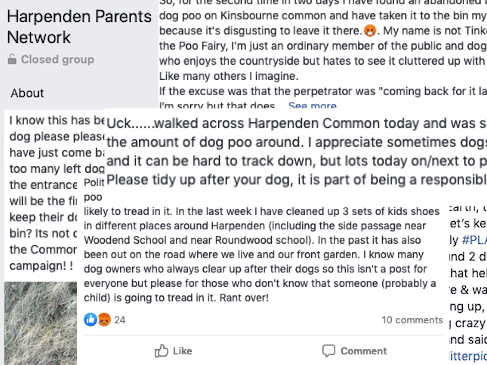
This is despite plenty of evidence to the contrary, as our accompanying video shows.  Indeed, barely a month goes by without a member of popular Facebook group Harpenden Parents Network complaining of dog faeces or – increasingly – discarded poo bags in and around the town.

Veterinary charity PDSA estimates that dog ownership has risen nationally by nearly 10 per cent over the past 8 years.  According to Keep Britain Tidy, these 8.9 million dogs produce around 1,000 tonnes of excrement every day.

37397693_10160497527165063_2628205142574366720_n

An unknown Harpenden local makes clear their position on dog poo.

Five years ago, the Government introduced increased powers for councils to issue on-the-spot fines to protect public spaces.

Many, including nearby East Herts District Council, took up these powers, fining owners up to £80 for failing to clean up their dogs’ mess.  Some have gone further.  In parts of Lincolnshire and Kent, dog walkers can even be fined for failing to have a sufficient number of bags with them.

St Albans and District Council has preferred the carrot to the stick, installing more bins and relying on dog owners to act responsibly.

Its website advises people to report anyone they see “allowing their dog to persistently foul on pavements”.  However, a spokesperson admitted the Council had received no complaints in recent memory, perhaps suggesting people do not know how to complain or have little faith their complaints will be acted upon.  It is understood the Council has no plans to change its approach.

Screen Shot 2019-07-22 at 13.43.09

Residents regularly vent their frustrations about dogs’ mess on Harpenden Parents Network.

Harpenden resident Philip Wigg, 41, said this “smacks of complacency”.

The father of three said: “Dog poo on our streets is a growing issue and a problem for hygiene and public health.  I cannot understand why the Council doesn’t exercise the powers it has at its disposal to fine dog owners who persistently refuse to clear up after their dogs.”

Enforcing a fining regime could be costly, but would also act as a revenue raiser.  For example, three councils in North Wales recently raised a combined £2.1 million over three years in dog fouling and litter fines alone.

There may also be difficulties in identifying culprits, but these are not insurmountable.  DNA testing has had some success in the US and Europe, and was trialled recently in Barking and Dagenham.  Although it relies on dog owners’ consent, it could serve to deter lazy owners from risking being apprehended.

One thing is for sure: until the Council takes firmer action, Harpenden residents will see dogs’ mess, poo bags and frustrated complaints continue to mount up.

If you see anyone persistently allowing their dog to foul on pavements, you can report this to St Albans and District Council’s Environmental Compliance Team on 01727 819406 or environmental@stalbans.gov.uk.

What’s all the fuss about?

Other than the inconvenience of scraping it off your shoe, is dogs’ mess really a problem?

Well, yes.  Canine faeces can carry worms and bacteria, which may transmit to other animals.  And, although rare, humans can contract toxocariasis from it – a nasty infection that can lead to dizziness, asthma and even blindness.

Nutrients in canine faeces can also disrupt ecological balance.  Earlier this month, East Northamptonshire Council rejected a planning application for housing partly due to fears over the effect increased dogs’ mess would have on a nearby nature reserve.


Fu-Gee-La

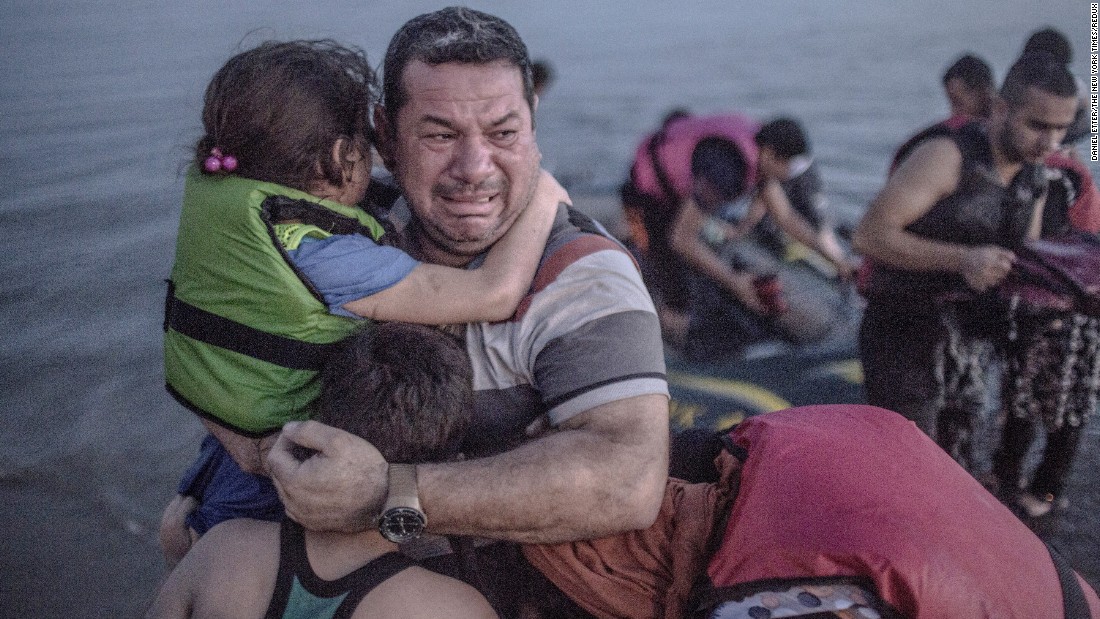
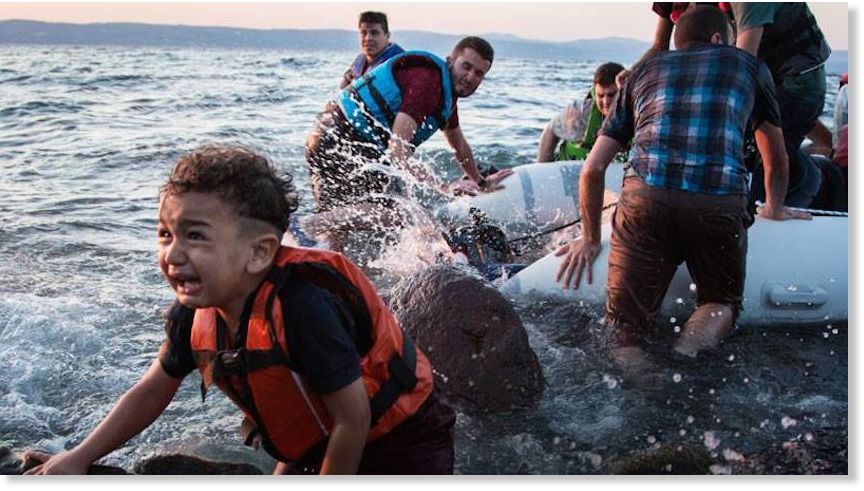
In an era of division and suspicion, there’ve been few more heartbreaking sights than those thrown up by the refugee crisis some say is blighting Europe.  In reality, of course, it isn’t Europe being blighted: it’s the victims – the migrants themselves – fleeing their homes in Syria and beyond to escape unimaginable horror.

150903120900-restricted-01-migrant-crisis-super-169

But, amidst the tragedy – to which there appears no real end in sight – we’ve witnessed genuinely heartwarming scenes.  The open arms extended by everyday Germans.  The kind treatment offered by Croatian border police.  The willingness of Ireland, Switzerland, Norway and Iceland voluntarily to opt into the EU’s migrant reallocation agreement.

As winter approaches, hearts begin to cool as some of this early compassion and acceptance wears thin.  Elsewhere, most notably in Hungary, there’s open and widespread hostility.

Europe’s polarised by the crisis, with one notable exception: the UK, which remains seemingly unaffected.

david-cameron-at-the-eu-s-007

Over a month ago, David Cameron pledged to take 20,000 refugees from camps along the Syrian border over the next five years under the so-called ‘Vulnerable Persons Resettlement scheme’.  But on Tuesday, Refugees Minister Richard Harrington admitted that the numbers being allowed into the UK had not increased since the pledge.  Over the same period, Germany has allowed around 300,000 refugees to cross its borders.

It’s fair to say that nobody was wowed by the deeply conservative resettlement scheme.  Paddy Ashdown described it as “derisory”.  Yvette Cooper called it “far too weak” and said it risked “children freezing to death on our doorstep”.

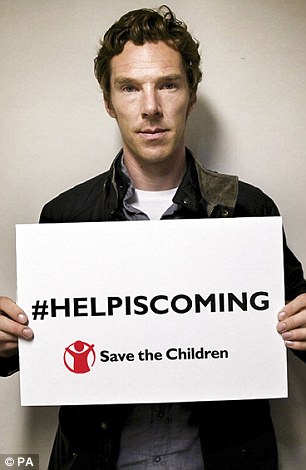
Even Benedict Cumberbatch waded in to complain that the government “is not doing enough”.

2C287C4500000578-3230407-image-m-4_1441963015689

The criticism doesn’t just concern the numbers, but also the process. As more than 300 lawyers and academics voiced this week, the resettlement scheme is “too low, too slow and too narrow”.

Cameron’s approach to the crisis appears to be twofold.

Yes, we’ll take some, but not those who’ve been desperate enough to flee their country.

The rationale given is that admitting those already in Europe would encourage others to flood into the continent and undermine the UK’s borders.

Cameron takes the position that those who’ve already made their way into Europe are … well, Europe’s problem.  And, of course, there’s something in this.  Even Angela Merkel tacitly admitted last Thursday that Germany’s response to the crisis couldn’t have been much different owing to its 3,000 km border: “We would have to build a fence.  There is no such thing as a stop to the intake.”

But there’s a fundamental flaw in the UK’s approach, as it serves to – at worst – penalise or – at best – overlook the people who’ve fled their lands.

150909191345-aman-syria-refugee-greece-exlarge-169

Most have done so with heavy hearts.  Most have risked their lives undertaking a perilous journey.  Most deserve as much help as those who’ve stayed behind.  Can we morally stand by and say ‘no’ to them?

Well, that’s what we’ve done so far, refusing to partake in the EU’s reallocation agreement.  And there’ll be many who agree with this stance, thinking it’s all very sad but we’ve got enough problems of our own to deal with.

But even those who want to see only a small intake of the most vulnerable migrants must accept there’s a huge flaw in the UK’s approach to this crisis: the question of timing.

Yes, we’ll take some, but not now, don’t ask us when.

Despite Mr Harrington’s bullshit bingo response that the UK’s refugee scheme is “gathering traction”, that’s not reflected in the figures.  So when will we see more people arriving?

When pressed for further details, Cameron resorts to his best impression of a disreputable builder, citing variables and hypotheticals beyond his control:

Well, it sorta depends.  First, someone’s gotta decide who can come over ‘ere.  Who?  Oh, um the UN High Commissioner for Refugees.  Then we’ve gotta somehow find the readies to give to the councils.  And, you know what they’re like!  It’ll take them ages to process the applications, ‘specially if there’s more leftie strikes.  So, no promises but … sometime soonish?

In response to this umming and ahhing, Maurice Wren, chief executive of the Refugee Council, points out the bleeding obvious: “The programme needs to be frontloaded as the crisis is now and the expansion must happen as a matter of urgency as people are living in desperate situations in the region and cannot wait until 2020 to reach safety.”

In fact, many can’t wait until 2016.

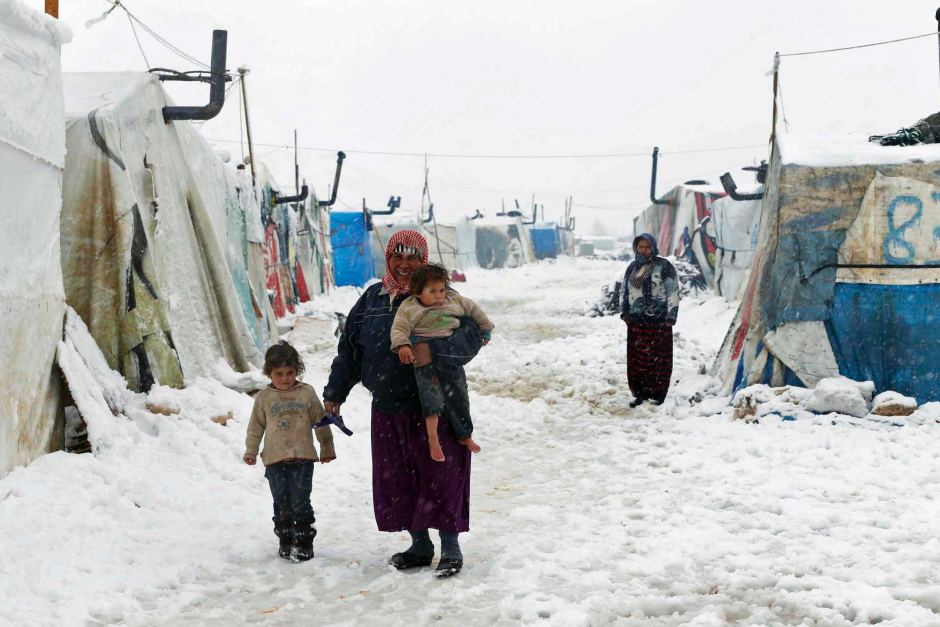
Last winter, a significant number of lives were lost to the cold conditions besetting makeshift camps along Syria’s borders.  Currently, over 500,000 Syrian refugees in Lebanon live in insecure shelters.  In Jordan, around half the refugee households visited by UN researchers earlier this year lacked any form of heating.

Put simply, vague promises of asylum in five years’ time aren’t going to keep vulnerable people alive in freezing temperatures.

6008428-3x2-940x627

And they certainly aren’t going to dissuade them from risking their lives to traipse or board a rickety raft to Europe, which – lest we forget – forms a major part of Cameron’s policy.

This hard reality has been confirmed by Florence Kim, spokeswoman for the International Organization for Migration: “Winter is going to hit camps in Lebanon or Turkey where the living conditions are already hard.  This is going to push people to leave.”

No one’s pretending there’s an easy solution.  There isn’t.  As many Germans now seem frustrated by their country’s approach as are supportive of it.  But at least it put forward a reasoned response, recognising the potential benefits to its economy of a migrant influx.

In contrast, the UK’s position is illogical and doomed to fail, except in the most narrow-minded NIMBY sense.

Even putting feeling and logic to one side and looking at this through the cold lens of hard-nosed politics, it seems a strange approach.  Because Cameron’s missing a trick.

As already mentioned, Angela Merkel knows she has little option but to accept vast numbers of refugees.  However, she’s spinning it perfectly, taking the moral high ground and calling it her “damned duty” to help the refugees.  So successful has she been that, despite criticism at home, she’s among the favourites to win this year’s Nobel Peace Prize.

-

But international matters don’t really seem to interest our Prime Minister.  And, several years ago, you could understand why.  The country was in a financial mess, the coalition felt compelled to take difficult steps to get it onto a more stable economic footing and Scottish devolution seemed a real possibility.

Now, with fewer than five years until he vacates office and with a healthier parliamentary majority than anyone expected, isn’t it time for Cameron to do something significant on a global stage?

‘Legacy’ is a dangerously loaded term, especially after a desire to be remembered seemed to transform Tony Blair from populist leader to hated war criminal.  But there’s a significant danger that Cameron will be left without a legacy – that, when he’s gone, those remaining will take credit for his successes: Osborne for the economy, Duncan Smith for welfare reform, Johnson for whatever ‘feel good factor’ exists in 2020.

Maybe Cameron doesn’t care.  Maybe it’s enough to do a relatively solid job domestically and walk away satisfied.  Maybe that’s where the UK now is in the world.

But it does a disservice to those of us who want our country to be about more than that.  And a disservice to all those we could help, but choose not to.

syrian_refugees_boat

Please consider donating to Save The Children’s Child Refugee Crisis Appeal.

Walk A Mile In My Shoes

On 2 September 1997, a professional footballer named Clarke Carlise made his debut for Blackpool in a 4-3 win over Wrexham.  Over the next 16 years, he went on to make 470 appearances for nine different clubs and earned three caps for the England Under 21s.

Impressing many with his intellect and eloquence, Clarke became an ambassador for football’s anti-racism Kick It Out campaign and Chairman of the Professional Footballers’ Association, alongside the inevitable media work that came his way.  Clarke retired from football in May 2013 with, one presumes, money in the bank and (in contrast with many retired sportsmen) a promising future ahead of him.

On the morning of 22 December 2014, Clarke Carlisle was hit by a lorry on the A64.

His condition was critical but he pulled through, finally returning home last week.  In an interview in today’s The Sun, Clarke revealed that the collision was no accident: he jumped in front of the lorry.  Clarke’s lucky to be alive and it’s to be hoped that, in time if not now, he agrees.

clarkecarlilse

Clarke explains that his suicide attempt “wasn’t escaping or running away” but represented, in his mind, “the perfect answer“.  Despite this, there will be some who accuse Clarke Carlisle of being a coward: that taking one’s life (or attempting to) is the ultimate act of surrender.

Those people are idiots, who’d do well to shut up and pay heed to the words of Elvis Presley: “Don’t criticise that man unless you have walked in his shoes“.

I can’t pretend to have walked in Clarke’s shoes but, over the past year, I’ve worn a similar make.  I’ve suffered from clinical depression and anxiety.  And I continue to.

At times, I felt incapable of partaking in everyday life and racked with guilt at the knowledge I’d become a burden to my loved ones.  I was also terrified that my condition was worsening and, as I fell, I couldn’t see the bottom.  When these sorts of feelings are allowed to fester, it’s no wonder that some see not continuing to live as a solution.

I haven’t defeated the Black Dog but, for now, I’m winning.  I never threw myself in front of a lorry but that isn’t because I was stronger or braver than Clarke Carlisle: it’s because I was lucky.  The Dog bit me hard, but decided not to go for the jugular.

Black-Dog-Hellhound

In many ways, I was nowhere near as brave as Clarke, who’s been open about his mental health problems for some time.  In 2013, he presented an insightful BBC documentary entitled Football’s Suicide Secret which delved into an issue that few in the macho world of professional sport want to discuss.  That year, he also published an autobiography which revealed he’d seriously contemplated suicide.

His announcement today should also be regarded as an act of courage because, for every Clarke Carlisle, there’s many more men and women who are scared to admit their perceived weaknesses.  A stigma’s still attached to mental health problems even if, from my own experience, people are becoming more understanding and compassionate than I expected.  But there are still dinosaurs about and I’m sure a fair number will make their voices heard on social media today.

These dinosaurs are only part of the problem though.  The other is the segment of our brains (conditioned by the world in which we’ve been raised) that considers mental illness to be a source of shame.

Thanks to this inner critic, I’ve found it very hard to bring up my depression even with those close to me, although I’m always relieved to talk about it when prompted to do so.  Even with strangers, I’ve found myself concealing it like some dirty little secret: avoiding smalltalk, making up disingenuous reasons why I’m off work, hiding the front cover of a book about depression on train journeys.

The self-judgment we project onto others makes the big wide world seem a frightening and lonely place.  As the dinosaurs die out, it’s hoped that the next generation will be spared this inner critic.

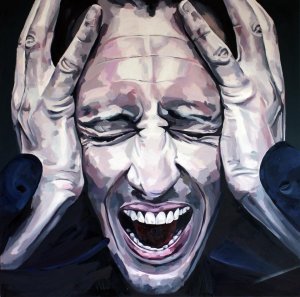
Madness-840x832

To this end, The Telegraph should hang its head in shame by choosing to headline today’s coverage of Clarke’s announcement with: “Clarke Carlisle confession: I stepped out in front of lorry because I wanted to die“.  “Confession” is commonly defined as a formal statement “admitting that one is guilty of a crime“.  Clearly, in this context, it’s an appalling choice of words which only reinforces the internal and external stigma the press should play its part in helping reduce.

An apology is needed, not just to Clarke, but to all sufferers of mental illness.

There will be some who say that Clarke is undeserving of an apology or sympathy: “How could someone so fit and strong, with all that money, fame and three beautiful children be so selfish?”  Those people are also idiots.

Because that list of reasons for living doesn’t constitute a charge sheet against someone who tries to kill him or herself; it indicates the severity of the illness they’re suffering from.  Try to imagine the mental imbalance required for someone to decide that, despite all those wonderful things in their life, it’s better for them not to carry on living.

If you can find some sympathy in your heart for an ageing bachelor who kills himself quietly in despair at life’s loneliness, it’s illogical not to locate at least as much for the tormented souls of people with “everything to live for” like Clarke Carlise, Gary Speed and Robin Williams to name but a few.

There’s a well-known proverb that conscience is “the dog that can’t bite, but never stops barking“.  Next time you feel inclined to pass judgment on people like Clarke Carlisle, listen to that dog.  And just pray to God it never gets a taste for blood.

Caught Out There

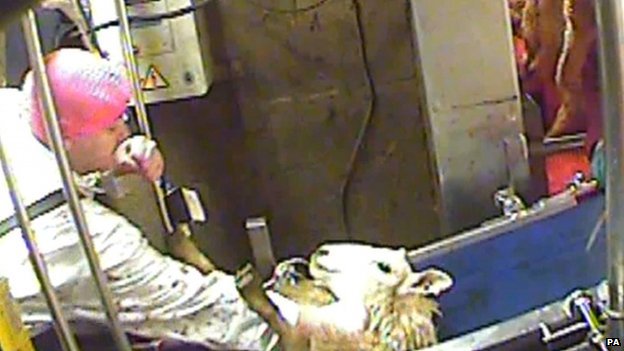
Several days after publishing the post entitled Breakfast At Tiffany’s, CCTV footage has come to light showing staff at the Bowood Lamb abattoir in North Yorkshire submitting animals under their care to shocking levels of cruelty.  Acts caught on camera included the kicking, throwing and punching of lambs waiting to meet their maker as well as appearing to use one as a space hopper.

As disgusting as the images undoubtedly are, they’ve served one purpose in helping to publicise the campaign to ban the religious slaughter of animals without first stunning them.  The campaign (which admittedly is in need of a catchier title) is gaining a broader base of support as well as the favour of influential politicians such as Sir Roger Gale MP and members of the Commons Select Committee on Environment, Food and Rural Affairs.

However, it’s been largely overlooked that much of the footage is irrelevant to the campaign.  There’s no obvious reason why the sight of dim-witted animals blindly following each other in carrying out acts of baabarity (sorry) is more likely to be seen in a halal abattoir than any other type of slaughterhouse.

If this were the sole concern, it could be assuaged by giving the employees the chop, considering criminal charges and following Animal Aid’s call for the compulsory installation of CCTV in abattoirs (a move that, sensibly, the Muslim Council of Britain seems to be supporting).

_80752288_halalunblurred2

The footage that is relevant to the debate is that showing someone hacking away at a lamb’s neck four or five times before its throat is effectively slit.  This risks ridiculing the suggestion that animals suffer no greater pain during non-stun slaughter.

Members of the Muslim community have responded by denying that the conduct caught on camera complies with Islamic practice.  However, it seems impossible to deny that this particular lamb would have experienced less of an ordeal had it been stunned before falling into the hands of a cack-handed killer.

Although calls to ban non-stun slaughter are getting louder, there’s still a fair amount of opposition for the campaign to overcome in the religious communities themselves and more unexpected places. For example, East Devon.  To be more precise, the constituency of Tiverton and Honiton where incumbent MP, Neil Parish, has made a strong early claim to win the much-coveted gong for “STUPIDEST ARGUMENT OF THE YEAR”.

neilparish

Looking nervously at a group of local farmers making throat-slitting gestures with their hands, Parish voiced his concern that “an outright ban on religious slaughter would not improve the welfare of animals at the point of slaughter.  Driving our halal meat industry abroad to countries without our robust animal welfare standards and our supply chain traceability might result in more animals being slaughtered without stunning.

So, Neil – just so I’ve got this right – what you’re saying is “We oughtn’t ban something them thar foreigners are doin’ anyways ‘cos it might mean the lads I share a jar with down the local get less for their livestock.  And I buy enough rounds as it is!“?

Astonishing stuff.  Whatever next?  BoJo calling for drug use to be legalised as Clapton crack-kitchens manufacture the purest highs and our capital’s junkies need the money? I wouldn’t rule it out.

bojo

Breakfast At Tiffany’s

“You’ll say, we’ve got nothing in common.  No common ground to start from.  And we’re falling apart.”

A lovely little one-hit-wonder from Deep Blue Something that takes us back to the autumn of 1996 when the Spice Girls had just shot to fame, England were half-decent at football and Dolly the Sheep became the first mammal to be cloned successfully from an adult cell.

It was also a time of relative calm between Jewish and Muslim communities, as the Oslo Accords had helped reduce the number of suicide attacks in Israel by Hamas and Islamic Jihad to just a few each year.  Good times.

Sorry, but things are about to get heavier.

The 18 and a bit years since have witnessed countless murders of Jewish men, women and children by extremists, a similar number of excessive and bloody reprisals by Israel – including last year’s horrendous and drawn out bombing campaign in Gaza – and the export of violence from the region into far-removed places such as a kosher delicatessen on the outskirts of Paris.

A great many positive things happened in these years as well, so keep your chin up.  But few could deny that most of the images beamed into our sitting rooms over the years make it abundantly clear that if Jews and Muslims celebrated Christmas, few would make it onto each other’s card list.

Israel-Palestinian-missiles-cartoon

Time to lighten the mood again.  Momentarily.

“You’ll say, the world has come between us.  Our lives have come between us.  Still I know you just don’t care.”

Good old DBS.  Fairly recently, the band’s lead singer, Todd Pipes, revealed that promoting the song became tiresome: “As the song had Breakfast in the title, radio stations thought it would be genius to have us on at breakfast time.  We’d be up till 3am and they’d wonder why we were pissed off playing at 6am.”  Well, at least Todd and the boys have had plenty of opportunity to sleep in the years since.  The world hasn’t come between them; it’s left them well alone.

The same can’t be said for Jews and Muslims.  Although the origins of their animosity are complex, it’s painfully apparent that the world – represented here by the United Nations and its members – handicapped their ability to live side by side in peace.  I’m talking, of course, about the bugger’s muddle made in managing the formation of a Jewish State in territory held sacred by both Jews and Muslims.

Far more learned people than I have pondered how it could have been done differently.  But it doesn’t take a scholar to see that things couldn’t have gone a whole lot worse: 70 odd years of West Side Story meets Groundhog Day, in which Bernardo blows up Riff on a bus, Tony launches retaliatory air strikes killing Bernardo, his family (including Maria) and neighbours, and Chino fires mortars at Tony’s apartment block.  And then the same thing happens the next day.  And the next.  Oh, and there’s no love angle in West Bank Story.  Or music.  But the special effects are quite something.

Thanks, the world.

“And I said what about Breakfast At Tiffany’s?  She said I think I remember the film and, as I recall, I think we both kind of liked it.  And I said well, that’s the one thing we’ve got.”

That damn catchy song comes to our rescue again and wades us through dangerous waters to the point of this post: despite their many differences, Jewish and Muslims communities appear to have a little more in common than they realise.

Friday’s front page of The Times reminds us of one shared ritual: Breakfast At Tiffany’s where the eponymous restauranteur piles their plates high with meat obtained in one of the most appalling ways imaginable: slow death from blood loss following an incision through the jugular vein, carotid artery and windpipe.  And would you like ketchup with that, sir?

audrey-hepburn-window-shopping-breakfast-at-tiffanys-movie-poster-CNst4090

Now, I bloody love meat and, as a consequence, I accept that animals have to be bred and killed for my pleasure.  But I strongly support current legislation requiring those responsible to refrain from causing or permitting the animals to suffer any avoidable pain.

In line with the law, the majority of animals killed for meat in this country are put out of their misery pretty quickly and painlessly.  To achieve this end, it’s been mandatory since 1979 for a stunner to be used on all EU livestock pre-slaughter, subject to certain religious exemptions addressed below.  By “stunner”, I don’t mean Emily Ratajkowski, but a mechanically operated device broadly similar to that used to tumble Princess Leia to the deck early in Star Wars Episode IV: A New Hope.

The purpose of stunning an animal is to leave it insensitive to pain prior to ending its life (rather than to make it easier to haul it before Lord Vader and admit where it’s hidden the secret plans).  When you think about it, it seems the very least we can do.

LeiaSupportsGunRights-ANH

But, as things stand, the law does not require pre-slaughter stunning in kosher and halal abattoirs.  Why?  Because vocal sections of Jewish and Muslim communities believe that books and scriptures written thousands of years ago prohibit it.  And remember, these books aren’t even written by celebrity chefs or anything.

Followers of Judaism believe that for meat to remain kosher the animal must be healthy and uninjured when the “schechita” process is carried out.  They argue that a stunned animal would fail this criteria.  Many also contend that animals feel no pain during the ritual, pointing to certain inconclusive scientific studies and the dubious doctrinal argument that their God would only provide for a merciful and compassionate method of killing his creatures.  

Islam differs in the sense that it only requires the animal to be alive when its throat is cut to qualify as halal.  Due to this lower threshold, many halal abattoirs follow the rest of the industry in stunning animals pre-slaughter.  But a significant and growing number of British Muslims operate under the misconception that stunning often kills the animal.  In Friday’s article, written by Ben Webster, it’s reported that in 2013 some 37 per cent of sheep and goats, 25 per cent of cattle and 16 per cent of poultry brought onto halal premises were killed without being first stunned.  This is a very significant increase from the figures for 2011 and mean that, in 2013, some 2.4 million sheep and goats were killed in halal and kosher abattoirs.  No figures have been given for cattle and poultry.

“Oh, crikey!  There’s a lot of talk about slaughter here, isn’t there?  Can’t we go back to that tune again, eh?  What about the instrumental bit two-thirds the way through?  “De-de-dew de-de-dew de-de-dew de-de-dew”.  So catchy.”

Sorry, folks, but not even the best DBS could muster can drag us away from the blood and guts quite yet.  According to Webster’s article (taking its figures from the European Food Safety Authority’s scientific panel on animal health and welfare), it can take up to 20 seconds for a sheep to lose consciousness once its throat is cut, up to two minutes for cattle and “two and a half minutes or more” for poultry (an odd choice of words suggesting that poor Chicken Licken sometimes waits an eternity before its sky falls in).

An unlikely brotherhood of Jews and Muslims downplay the significance of these statistics, by pointing out that no-one really knows whether animals suffer during this time lag.  Even Webster is only prepared to say that the gap between throats being cut and losing consciousness means “that they might experience pain for that period.”  But why should the burden of proof fall on the rest of society?  If the EU has already determined it inhumane for abattoirs not to stun first, slaughter later, shouldn’t the onus be on these communities to prove (at least beyond reasonable doubt) that no additional pain and suffering occurs.

And if they can’t, what then?
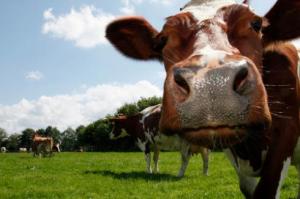
500COW

I agree that all this is rather horrible but I respect, above all else, people’s right to practice their religion“.  Not a DBS lyric, but a conceivable response nonetheless and one with which, for now at least, the Government agrees.

As stated above, it seems that Muslims can adhere to their religion and meet the standards set for the rest of society.  Use a stunner.  If they won’t, compel them to.  Legislation could actually help the Muslim community in this regard, as the Koran permits Muslims to eat non-halal meat if there’s no other halal food available and he or she is forced by necessity (Surah 2:173).  Problem solved.

Of course, Kosher meat is tougher (especially if overcooked) owing to the different test applied.  We’ve got to ask ourselves a very important question here: what rights (if any) should be placed above the right of people to practice their religion freely?  The indignation voiced by many following the recent Charlie Hebdo killings seems to confirm the primacy of free speech over religious dogma.  But, in a civilised society, can the humane treatment of animals be ranked lower than the freedom to draw, print and disseminate insulting cartoons?

The Danish Government doesn’t think so.  It outlawed all non-stun slaughter in early 2014, announcing that “animal rights come before religion“.

It’s surely time for the British Government to follow suit.  The alternative is to pick the low hanging fruit and clamp down on halal practices only.  In a country where many Muslims already feel marginalised, this option is wrapped in risk.  The better approach must be to ban non-stun slaughter from halal and kosher abattoirs and, in the process, give the Jewish and Muslim communities something else in common.

Fortunately, there are a good number of similarly minded people in this country, including the British Veterinary Association which has launched a petition calling for the matter to be debated in the House of Commons.  On Thursday, the number of signatures passed the 100,000 mark and it remains open until the end of March 2015.

The petition can be signed here and I urge you to do so.

It could form a common ground for us to start from and has to be better than watching that awful film again.

Modern Life Is Rubbish

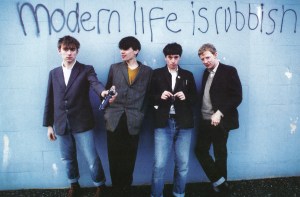
Modern Life Is Rubbish.  So said Blur, but what do they know?  Lest we forget, this is the same gaggle of geeks that informed us it’s not easy to get your head “checked” by a jumbo jet, whatever the hell that means; the same lazy lyricists who introduced their fans to an obscure French novelist, Honore de Balzac, in a desperate attempt to rhyme something, anything, with Prozac (a trade name of the antidepressant Fluoxetine, whose popularity in the 1990s coincided with Blur’s rise in the charts).

Although I didn’t admit it at the time, or to many people since, I never really liked them.  They acted “all cool”, but were the sort of kids who would’ve been ignored at school, lacking the Oasian arrogance to rule the roost or the Radioheadic courage to say what they really felt even if they got a shoeing from the roost-rulers for their troubles.  And what becomes of the Great Ignored?  Well, they tend to do rather well: pass their exams, attend a good college or university to study something impractical and eventually become lawyers, befriend politicians, dabble in the arts (without ever really caring that much about them) and, once their swimmers have sauntered their way into the private members’ clubs of others in their clan, patiently tap the one-armed name-generator bandit until it spits out the sort of vomit-inducing middle-class combination that will really help their children fit in at playtime.

But while success may be drawn to them, the Great Ignored usually lack the streak of genius that sets apart the great from the good.  Or maybe it’s the hunger.  The roost-rulers have it: the only difference between childhood and adulthood being the size of the stadium they have to fill with the standing ovations starved of them as babies.  And the courageous kickees?  They’re just relieved to find a platform from which they can continue to deliver their brand of honesty, this time without retribution.  Like the roost-rulers, their hunger is easy to understand: you’ve always dreamed of this, so why would you ever want to wake up?

What about the Great Ignored?  Who?  Oh, them.  Those who show the ability to tap into the zeitgeist (a rung or two below genius) and a decent appetite for what’s on their plate don’t normally last when the music stops.  Gravity pulls them back to where they’re comfortable: they become lawyers (Dave Rowntree), befriend politicians (Alex James), dabble in the arts (Damon Albarn) and excel themselves on the name-generator (Graham Coxon, father of Dorelia Amaryllis Bee and Pepper Bäk Troy).  Take a bow, Graham: you’re the proud father of an insect and a Thai side dish.  I can’t bring myself to list the names of Alex James’ five children.  Do that in your own time, not mine.

Now, where’s that jumbo jet?

tumblr_mmumraTLwa1qaihw2o2_1280

Anyway, I digress.  Blur were wrong.  Modern life isn’t rubbish.  It’s much worse than that.

Rubbish is the unwanted stuff we toss in the bin: something of no further value robotically transferred into increasingly larger containers until, two weeks later, some thick-necked oddballs in high-vis jackets feed it to their lorries and discard its last-known abode carelessly onto our lawns.  But while modern life includes all manner of things we’d like to throw binwards (used and abused teabags and their left-behind basin stains, moulding strawberry hulls entombed in ice at the back of the fridge, passels of pointless plastic packaging, a flashbacked hangover brought on by the sight of more glass bottles than there should be), the wanton mass of waste material won’t move.  Modern life sticks onto all surfaces it touches.  It can’t be shifted.  And it won’t let you ignore it.  It’s the classroom cretin constantly trying to catch your eye by flicking freshly-picked-and-rolled greeners at you until you give it the satisfaction of looking its way.

What can you do with it?  You’ve got two options: move away or learn to deal with this prick.  Unless you possess the insanity or spirituality to give up your worldly possessions and take off into the woods, the first choice isn’t terribly attractive.  So, how can you deal with modern life?  Get a taste for bogeys?  No, thank you.  This is what you do: you pick your own and you flick them back.

And that’s what I’m doing.  Dear readers (if any are out there), consider this blog to be a growing heap of my nasal detritus, projected not towards you – you understand – but right back at modern life when its attention-grabbing efforts become too much.  I can’t rule out the possibility of you getting caught in the crossfire.  If you don’t mind it, that’s great.  If you do, you can always move away.  Or flick some back, I suppose.  BUT IF YOU DO THAT, WHERE DOES IT END?

Instead, I urge you to sit back, relax, and pop on some music while I harvest some more greens.  But not Blur.  I never really liked them.