Yesterday was a good day for Ed Miliband.
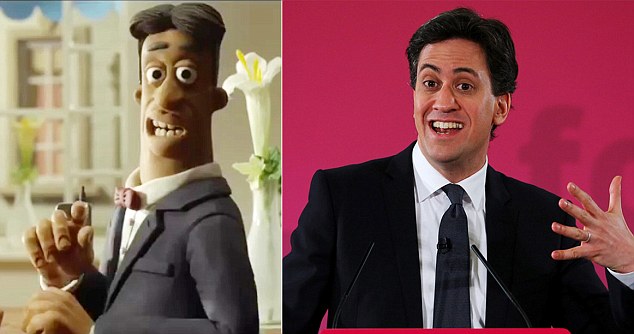
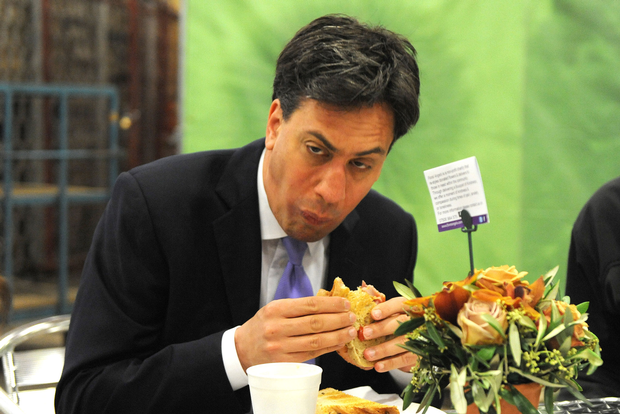
He got up and made it downstairs without any comments on his bleary eyes. He ate a hearty breakfast, delightfully free from any pork products – to paraphrase Ice Cube, he got his grub on but didn’t pig out. After breakfast, he hopped into his soft-top ride and travelled, without incident or ‘jackers’, to the House of Commons where television cameras rolled right past him without so much as stopping to compare him to Mr Bean.
Then, after ten days spent so much on the defensive that Harriet Harman was summoned to ‘park the bus‘, Ed got his game face on and went on the attack. And he didn’t even have to use his AK.
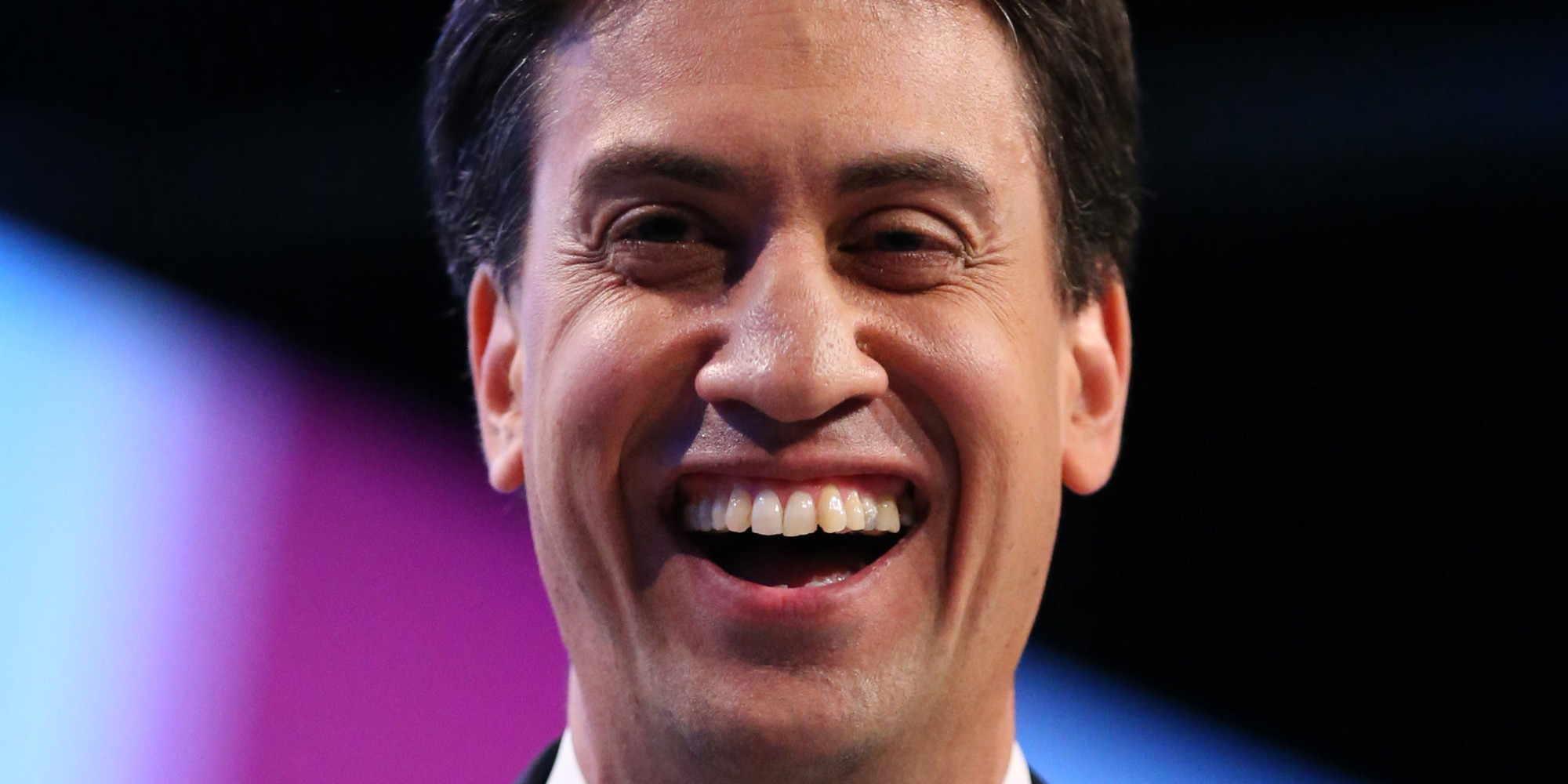
At PMQs, Ed and several pre-prepped minions bombarded the PM with questions about how much he knew of the alleged criminal activities of HSBC’s Swiss banking division before ennobling its former Chairman, Stephen Green, in November 2010 and appointing him as Minister of State for Trade and Investment early the following year.
Judging by the swagger with which Miliband has strutted his stuff since, the attack succeeded. The reason is because Miliband has finally understood that – despite some of his previous claims – appearances matter in politics.
Once you dig into the detail, it’s hard to see the Government has done anything wrong. Despite this, today’s papers are filled with woolly accusations and bang-on-the-money reports that Cameron looked ill-prepared and evasive during the assault. And, when all this dies down, that’s the image Miliband will try to project onto the public’s consciousness.

There are, in essence, three accusations against Cameron:
1. That he showed poor judgment in appointing Lord Green when he knew (or ought to have known) that HSBC was suspected of illegal activity during his appointee’s watch.
2. That the Conservatives benefitted from such activity by receiving over £5m from HSBC clients who held Swiss accounts during the relevant period of 2005-2007.
3. That the Government gave HSBC and its clients an ‘easy ride’ in the subsequent investigation, either as some sort of unspoken quid pro quo or through ineptitude.
Based on the facts presently available, none of these accusations stands up to any serious scrutiny.
Starting with the first, HMRC received the so-called ‘Swiss disc’ – containing data on around 6,000 individuals who may have evaded UK taxes – from French tax authorities around May 2010, several months before Lord Green’s appointment. However, until the story broke last weekend, its contents were kept secret from ministers, agencies and regulators due to various confidentiality undertakings HMRC had given to the French.
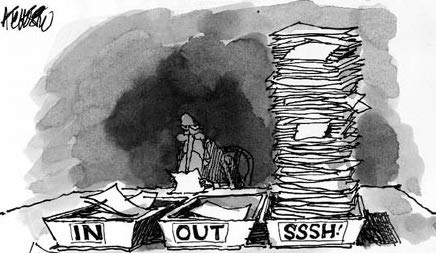
Some will say “the Government must’ve known something was going on, even if it didn’t know the precise details“. And that’s true. In September 2011, David Hartnett (then head of HMRC) told a Treasury select committee that: “I think the whole nation probably knows that our department has a disc from the Swiss – from the Geneva branch of a major UK bank – with 6,000 names, all ripe for investigation.”
But it’s conceivable the Government didn’t know “something” was going before Lord Green took up his new role. More importantly, as Number 10 has been at pains to point out, it’s one thing for HMRC to investigate wealthy individuals for tax evasion; quite another for regulators to suspect a large and well-respected bank of being complicit. Cameron maintains that the correct procedures were followed and, as things stand, there’s no obvious reason to doubt this.
Moving to the second accusation, no evidence has been disclosed linking Tory donors to any illegal conduct. For the moment, Miliband puts his glass house at risk by hurling stones across the Commons, as Labour also received sums from HSBC clients holding Swiss accounts during the relevant period: some £500,000 in cash and gifts in kind, as well as a £2m loan.
Miliband has waved this away on the basis that the sums were handed to his party before he became leader. But cynics would argue that Labour’s record of receiving no further sums from such sources is nothing to shout about, owing more to his deep unpopularity than any higher standards of due diligence or ethics.

As to the third and final accusation, it’s unclear how the Government could possibly have affected the pace or outcome of HMRC’s investigations. For all its faults, HMRC is an independent body whose main functions include the recovery of unpaid taxes in accordance with legislation and its internal rulebook.
Yesterday, Lin Homer (HMRC chief executive) pointed out to a public accounts committee that HMRC had recovered around £135m from approximately 1,100 of those named on the Swiss disc. She also reiterated that HMRC was unable to pass on information to other regulatory bodies, such as the Financial Conduct Authority, who may have been able to take tougher action sooner.
So, where does this all leave us?
Well, the significant policy issue to emerge from this mess is that the country needs a more effective ‘joined up’ approach to recovering unpaid taxes and bringing those responsible to book. Cameron yesterday reminded the Commons that he’d taken significant steps down this road, but Miliband wants to go further. And the man on the street is likely to be behind him.
But few are thinking about policy today because the stench of scandal is much more alluring.
In the weeks to come, much of the mud thrown at Cameron will wash off. But Labour will continue to point out the bits that stick and, in the process, appear to have stumbled upon an election strategy. Whatever Douglas Alexander’s shortcomings to date, even he’s capable of pointing his laser pen at a projector screen reading: “TOO DODGY AND TOO CHUMMY WITH BUSINESS”.

Because Labour will shout long and loud that Cameron’s judgment is questionable. Some are already calling Lord Green’s appointment “Andy Coulson mark II“, referring to the most damaging episode of Cameron’s reign: his decision to appoint the former News of the World editor as communications director despite reports of phone hacking at the newspaper. The move seemed inadvisable at the time; it became disastrous when Coulson was forced to resign in January 2011 and was later found guilty of conspiracy to intercept voicemails.
Labour’s task will be to remind voters of George W. Bush’s painful butchering of an old saying in Tennessee: “Fool me once, shame on … shame on you. Fool me — you can’t get fooled again.”
The second claim we’ll hear more of is that the Tories are too close to business. Labour’s skating on thin ice with this one, given the alleged misconduct took place when Labour was in power. Equally, the Lib Dems will struggle to reach the moral high ground given that in 2010 Vince Cable heralded Lord Green as “One of the few to emerge with credit from the recent financial crisis, and somebody who has set out a powerful philosophy for ethical business.”
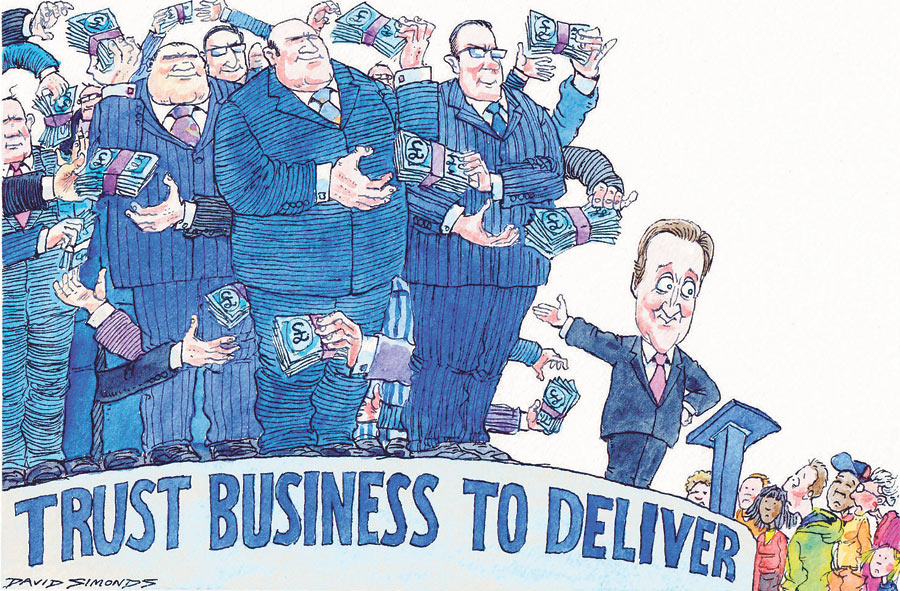
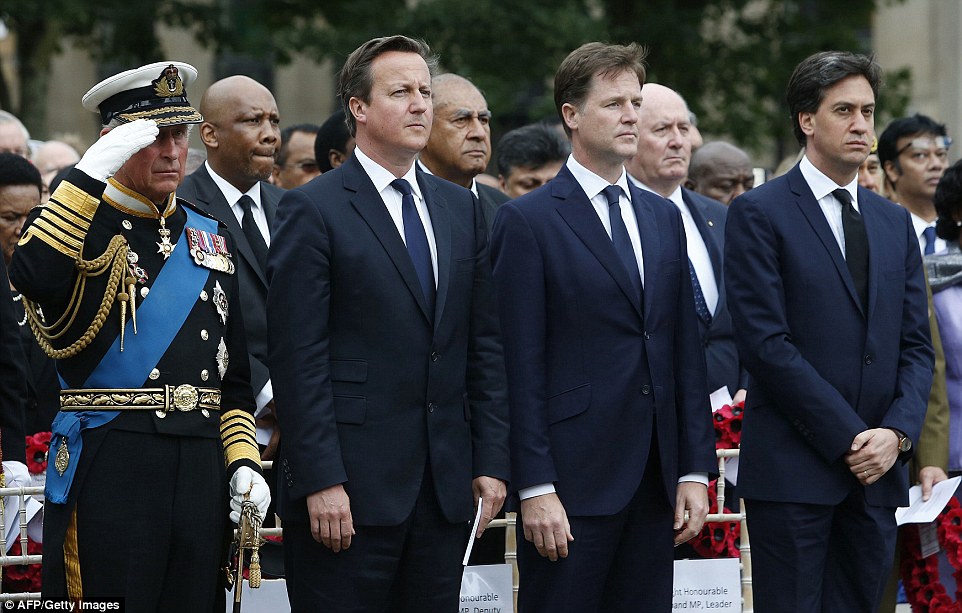
But Labour will risk the ice because they’ve got nowhere else to go on business, after the previous ten days spent burning most of their bridges with British commerce. The latest act of arson on civil engineering took place on Tuesday, when Cameron and Clegg gave speeches at the British Chambers of Commerce annual conference.
Rather than sending out its leader to reassure the attendees that Labour meant them no harm, Ed Balls and Chucka Umunna turned up instead. Worse still, they had no explanation for Miliband’s absence: the best Ed Balls could muster was a contemptuous “I have absolutely no idea“.
Back on Tuesday, this also seemed a fair summary of Labour’s election strategy. But, by hook or by crook, the HSBC story has given Labour’s chances of success a timely shot in the arm.
And we now know where Ed Miliband was. He was preparing for a good day.




 Project Refuse