In an era of division and suspicion, there’ve been few more heartbreaking sights than those thrown up by the refugee crisis some say is blighting Europe. In reality, of course, it isn’t Europe being blighted: it’s the victims – the migrants themselves – fleeing their homes in Syria and beyond to escape unimaginable horror.
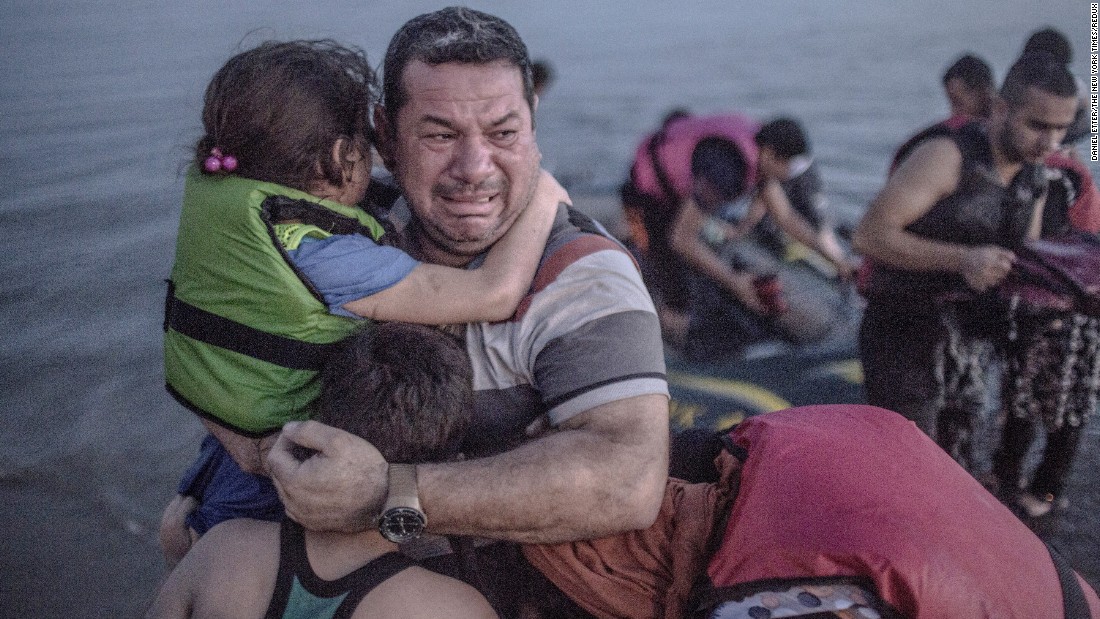
But, amidst the tragedy – to which there appears no real end in sight – we’ve witnessed genuinely heartwarming scenes. The open arms extended by everyday Germans. The kind treatment offered by Croatian border police. The willingness of Ireland, Switzerland, Norway and Iceland voluntarily to opt into the EU’s migrant reallocation agreement.
As winter approaches, hearts begin to cool as some of this early compassion and acceptance wears thin. Elsewhere, most notably in Hungary, there’s open and widespread hostility.
Europe’s polarised by the crisis, with one notable exception: the UK, which remains seemingly unaffected.
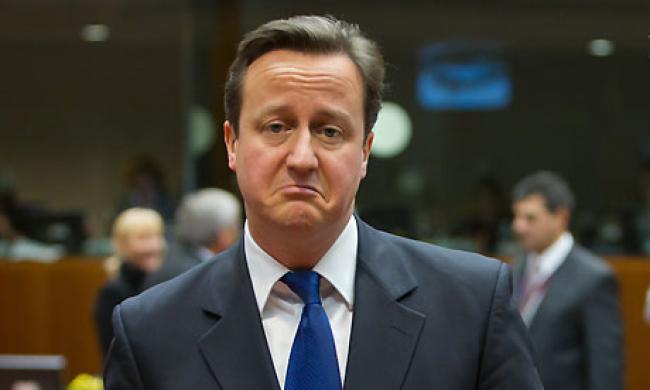
Over a month ago, David Cameron pledged to take 20,000 refugees from camps along the Syrian border over the next five years under the so-called ‘Vulnerable Persons Resettlement scheme’. But on Tuesday, Refugees Minister Richard Harrington admitted that the numbers being allowed into the UK had not increased since the pledge. Over the same period, Germany has allowed around 300,000 refugees to cross its borders.
It’s fair to say that nobody was wowed by the deeply conservative resettlement scheme. Paddy Ashdown described it as “derisory”. Yvette Cooper called it “far too weak” and said it risked “children freezing to death on our doorstep”.
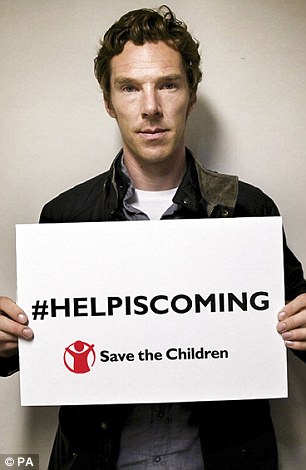
Even Benedict Cumberbatch waded in to complain that the government “is not doing enough”.
The criticism doesn’t just concern the numbers, but also the process. As more than 300 lawyers and academics voiced this week, the resettlement scheme is “too low, too slow and too narrow”.
Cameron’s approach to the crisis appears to be twofold.
Yes, we’ll take some, but not those who’ve been desperate enough to flee their country.
The rationale given is that admitting those already in Europe would encourage others to flood into the continent and undermine the UK’s borders.
Cameron takes the position that those who’ve already made their way into Europe are … well, Europe’s problem. And, of course, there’s something in this. Even Angela Merkel tacitly admitted last Thursday that Germany’s response to the crisis couldn’t have been much different owing to its 3,000 km border: “We would have to build a fence. There is no such thing as a stop to the intake.”
But there’s a fundamental flaw in the UK’s approach, as it serves to – at worst – penalise or – at best – overlook the people who’ve fled their lands.
Most have done so with heavy hearts. Most have risked their lives undertaking a perilous journey. Most deserve as much help as those who’ve stayed behind. Can we morally stand by and say ‘no’ to them?
Well, that’s what we’ve done so far, refusing to partake in the EU’s reallocation agreement. And there’ll be many who agree with this stance, thinking it’s all very sad but we’ve got enough problems of our own to deal with.
But even those who want to see only a small intake of the most vulnerable migrants must accept there’s a huge flaw in the UK’s approach to this crisis: the question of timing.
Yes, we’ll take some, but not now, don’t ask us when.
Despite Mr Harrington’s bullshit bingo response that the UK’s refugee scheme is “gathering traction”, that’s not reflected in the figures. So when will we see more people arriving?
When pressed for further details, Cameron resorts to his best impression of a disreputable builder, citing variables and hypotheticals beyond his control:
Well, it sorta depends. First, someone’s gotta decide who can come over ‘ere. Who? Oh, um the UN High Commissioner for Refugees. Then we’ve gotta somehow find the readies to give to the councils. And, you know what they’re like! It’ll take them ages to process the applications, ‘specially if there’s more leftie strikes. So, no promises but … sometime soonish?
In response to this umming and ahhing, Maurice Wren, chief executive of the Refugee Council, points out the bleeding obvious: “The programme needs to be frontloaded as the crisis is now and the expansion must happen as a matter of urgency as people are living in desperate situations in the region and cannot wait until 2020 to reach safety.”
In fact, many can’t wait until 2016.
Last winter, a significant number of lives were lost to the cold conditions besetting makeshift camps along Syria’s borders. Currently, over 500,000 Syrian refugees in Lebanon live in insecure shelters. In Jordan, around half the refugee households visited by UN researchers earlier this year lacked any form of heating.
Put simply, vague promises of asylum in five years’ time aren’t going to keep vulnerable people alive in freezing temperatures.
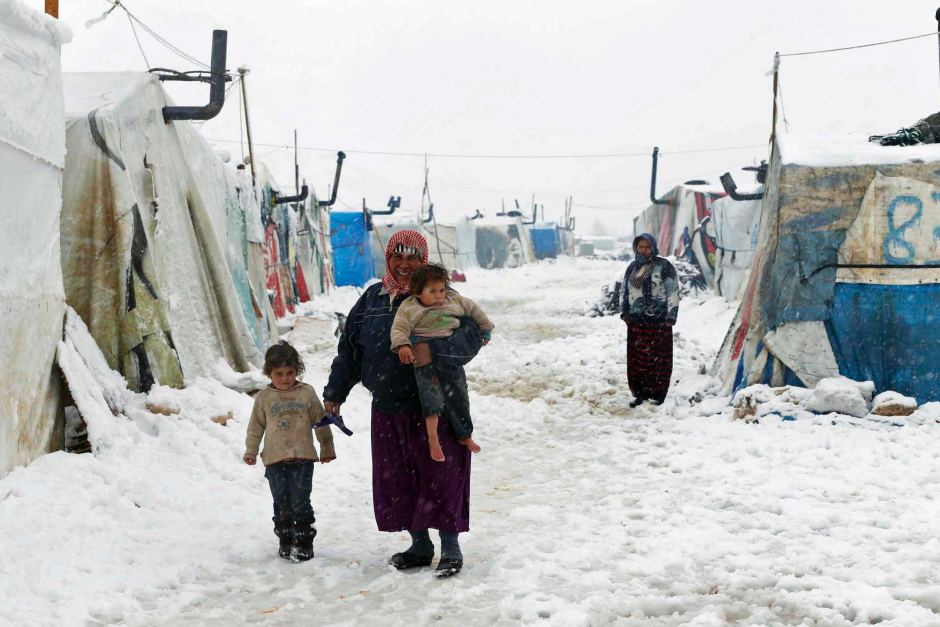
And they certainly aren’t going to dissuade them from risking their lives to traipse or board a rickety raft to Europe, which – lest we forget – forms a major part of Cameron’s policy.
This hard reality has been confirmed by Florence Kim, spokeswoman for the International Organization for Migration: “Winter is going to hit camps in Lebanon or Turkey where the living conditions are already hard. This is going to push people to leave.”
No one’s pretending there’s an easy solution. There isn’t. As many Germans now seem frustrated by their country’s approach as are supportive of it. But at least it put forward a reasoned response, recognising the potential benefits to its economy of a migrant influx.
In contrast, the UK’s position is illogical and doomed to fail, except in the most narrow-minded NIMBY sense.
Even putting feeling and logic to one side and looking at this through the cold lens of hard-nosed politics, it seems a strange approach. Because Cameron’s missing a trick.
As already mentioned, Angela Merkel knows she has little option but to accept vast numbers of refugees. However, she’s spinning it perfectly, taking the moral high ground and calling it her “damned duty” to help the refugees. So successful has she been that, despite criticism at home, she’s among the favourites to win this year’s Nobel Peace Prize.

But international matters don’t really seem to interest our Prime Minister. And, several years ago, you could understand why. The country was in a financial mess, the coalition felt compelled to take difficult steps to get it onto a more stable economic footing and Scottish devolution seemed a real possibility.
Now, with fewer than five years until he vacates office and with a healthier parliamentary majority than anyone expected, isn’t it time for Cameron to do something significant on a global stage?
‘Legacy’ is a dangerously loaded term, especially after a desire to be remembered seemed to transform Tony Blair from populist leader to hated war criminal. But there’s a significant danger that Cameron will be left without a legacy – that, when he’s gone, those remaining will take credit for his successes: Osborne for the economy, Duncan Smith for welfare reform, Johnson for whatever ‘feel good factor’ exists in 2020.
Maybe Cameron doesn’t care. Maybe it’s enough to do a relatively solid job domestically and walk away satisfied. Maybe that’s where the UK now is in the world.
But it does a disservice to those of us who want our country to be about more than that. And a disservice to all those we could help, but choose not to.
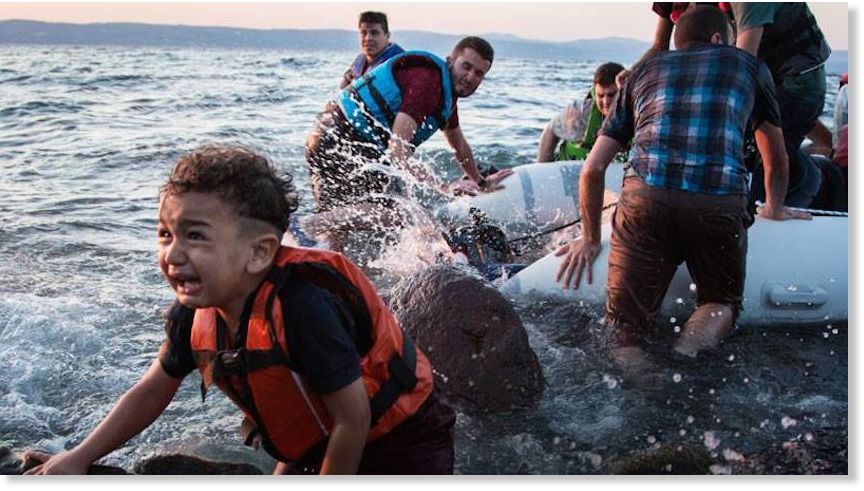
Please consider donating to Save The Children’s Child Refugee Crisis Appeal.
 Project Refuse